Saturday, 13 October 2018

PRAYING THE ROSARY AS AN OUTPOURING OF OUR LOVE

As we pray the Rosary during the month of October, seeking Our Lady’s assistance, we are reminded about the conversations between Jesus Christ and St. Peter, the Apostle, after the Resurrection of Jesus (John 21: 15-17). Jesus asks him, “Simon, son of John, do you love me?” Jesus asks this question three times and Peter’s answer was, “Lord, you know that I love you.” By asking Peter three times, Jesus emphasised the importance of Peter’s love and obedience to Jesus, as it was necessary for his future ministry.

St. Pope John Paul II, the great modern saint, in his Apostolic Letter, Rosarium Virginis Mariae (Rosary of the Virgin Mary - RVM), which was promulgated on 16 October 2002, emphasised that a prayer and devotion to the Holy Rosary is necessary and important, because it has changed the lives of many. As Peter repeated three times to Jesus’ question, ”Do you love Me?” - we too should not fail in the simple repetition of praying the Rosary, “to understand the Rosary, one has to enter into the psychological dynamic proper to love” and the Rosary is an outpouring of that love. Thus, we are encouraged to recite the Rosary repeatedly and courageously, giving ourselves to Christ, out of love for Him (RVM, no. 26).

In this Apostolic Letter, St. Pope John Paul II strongly encourages us to practice and devote ourselves to the Most Holy Rosary because it is a “genuine training in holiness” that guides us in our contemplation of the great mysteries of our faith (RVM, no. 5). As we pray daily during the month of Rosary, we will be prompted by the Holy Spirit to form and reform our lives much closer to Christ’s heart.

Our lives are challenged by all kinds of temptations and trials, and our personal struggles tire us. Saint Pope John Paul II recommends that we adopt the habit of rolling the small rosary beads through our fingers, and go into the depth of Christ’s mysteries (cf. RVM, no. 36). We may not have immediate answers to our problems or solutions to defeat the devil, but it will give us the “confidence of knowing that God looks with favour on his lowly servants.” Praying the Rosary increases our faith and gives us courage to say “Yes” to our Lord. With the intercession and maternal care of Mother Mary, may we find consolation and peace, discovering a path to life eternal.

Saint Pope John Paul II quoted the late Father Patrick Peyton (1909-1992), who was an Irish Catholic priest, internationally known as the ‘Rosary Priest’. He said “the family that prays together, stays together” and insisted Catholic families pray the Rosary for the sake of their families - which were under attack and in crisis. We have seen and heard of the growing number of separations and divorces in our families and communities. Praying the family Rosary is a way for us to bring these troubled married couples closer to Jesus, and to unite them in difficult times.

Earlier this month, the Holy Father, Pope Francis stated that the devil is trying to divide and attack the Catholic Church with a series of sexual abuse scandals within the clergy. He invited Catholics around the world to pray a special prayer every day during the month of October, for the Church to succeed through the devil’s assault. The clergy should also be men of prayer, and pray for themselves and for the people of God.

Our devotion to Our Lady and the family Rosary can serve the Universal Church, its clergy, married couples as well as our children. Mary, Mother of God, pray for us in our time of sorrow and frustration, and be our comfort, joy and strength.

THE RICH AND AND HIS ATTITUDES TOWARDS WEALTH

Jesus gave a wealthy man an invitation to “follow Him and be a disciple.” Jesus said “go and sell what you own and give the money to the poor, and you will have treasure in heaven; and then come, follow me.” 

Jesus saw his desire and his sincerity, and He loved him. He wanted him to become a follower and gave him that opportunity. After hearing the words of Jesus “went away sad,”(MK 10: 21-22)


This rich man had been successful in his life and earned great wealth. He had everything – power, position, wealth and prosperity. He was a good-living man, he kept all the commandments from his youth upward and he had an interest in eternal life. Yet, he filled the emptiness in his heart and life but he continued to search for something to fill the emptiness that would bring you joy in his life.

We, Christians whose whole purpose in this life on earth is not the accumulations of material goods. We shall learn from this rich man’s mistake and make use our opportunities right now to ensure that our lives leads to life eternal.

“Fill us with your love so that we may rejoice,” (Psalms 90)


Saturday, 6 October 2018

GIVING THE ELDERLY THEIR DUE RESPECT

The United Nations designated 1 October as the International Day of Older Persons. The Archdiocese of Kuala Lumpur celebrated this significant day last Sunday, 30 September 2018 at St Joseph Church, Sentul during the 6.00 pm Mass. It was the first for the Archdiocese as well as our Church, as host.

About 700 elderly parishioners over the age of 60 from Kuantan, Seremban and other parts of the Klang Valley attended the Mass, celebrated by Archbishop Julian Leow and concelebrated by Cardinal Soter Fernandez as well as Archbishop Emeritus Murphy Pakiam.

The theme for this year’s International Day of Older Persons is “Celebrating Older Human Rights Champions”.  The elderly population is growing globally, and people are aware of the serious problems that affect their health and the need for the protection of their rights. They are human too and they need the same dignity and respect as people of all other age categories. Archbishop Julian Leow highlighted that the elderly are experienced and wise, and all other age groups have many things to learn from them. Their ages represent the “wealth of life experiences” and that “wisdom really does comes with age.” Their knowledge and experience can contribute to society.

Many people are worried as they grow older. They worry that their children will not care for them and that they may end up alone and unwanted. Most old people wish to stay in their own homes till the very end, and receive care and support from their families. As they age, they may somehow feel that they are losing value as a significant member of society. Therefore, it is the responsibility of every individual in the family to care for their aging parents and grandparents, and help them feel wanted and included.

In today’s culture, nursing and old folk homes are becoming more acceptable. Due to our work commitments and other family issues, we may sometimes take the option of placing our elderly in proper nursing facilities or care homes. Generally, as Christians, we always try our level best to give due respect towards the elderly. Our Bible tells us to respect elders and treat them as how we would like to be treated ourselves (Lev 19: 32-34) and our obligation is to honour our parents, including the elders, (4th Commandment – Ex 20:21).

How can we minister to the elderly? The number of elderly people in our parishes are growing. The Church provides a wonderful way to engage with them, even when they find it difficult to come for Mass or other services. We are glad that our Extra-Ordinary Ministers make the effort to go for homebound visits, by bringing Holy Communion. Some of our priests visit the homebound at least twice a year, especially during the Season of Lent and Advent.

During this month of Rosary, we specifically pray for the elderly – asking for their good health and long dignified lives. As we offer a decade or two, let us also pray to be a listening friend to them. They have many stories to share with us. Once in a while offer hope, support and encouragement. Many elderly people may be unable to attend Church due to transportation issues, so if you know of any such person, lend them a helping hand and bring them to Church with you. When that is not possible, perhaps try singing and praying together at home, and read the Bible to them, from time to time.


“Do not cast me away when I am old; do not forsake me when my strength is gone,” (Ps 71:9).

MARRIAGE: LEARNING TO UNDERSTAND

In today’s Gospel, the Pharisees try to trap Jesus by asking, “Is it lawful for a man to divorce his wife?” (MK10:2). Jesus answers, “This is why a man leaves his father and mother and becomes attached to his wife, and they become one flesh,” (Gn 2:24). Jesus emphasises the permanence and sanctity of marriage.

When a couple marry, they intend to stay permanent but sometimes things happen that make that impossible. This is not God’s will. God’s intention is for them to live in relationships with each other and with God.

Jesus is teaching us today that divorce is wrong because “What God has joined together, let not man separate it,” (MT 19:6).

The Catechism teaches, “the spouses as ministers of Christ's grace mutually confer upon each other the sacrament of Matrimony by expressing their consent before the Church” (CCC no.1623). They confer Christ’s grace upon each other. A love commitment is the will and marriage consent is an act of the will.

The laws of marriage and divorce have been put in place for a reason: to protect people and preserve the peace between the spouses.


“May the Lord bless us all the days of our lives,” (Ps 128).


Saturday, 29 September 2018

ACKNOWLEDGING THE COMMON GROUND

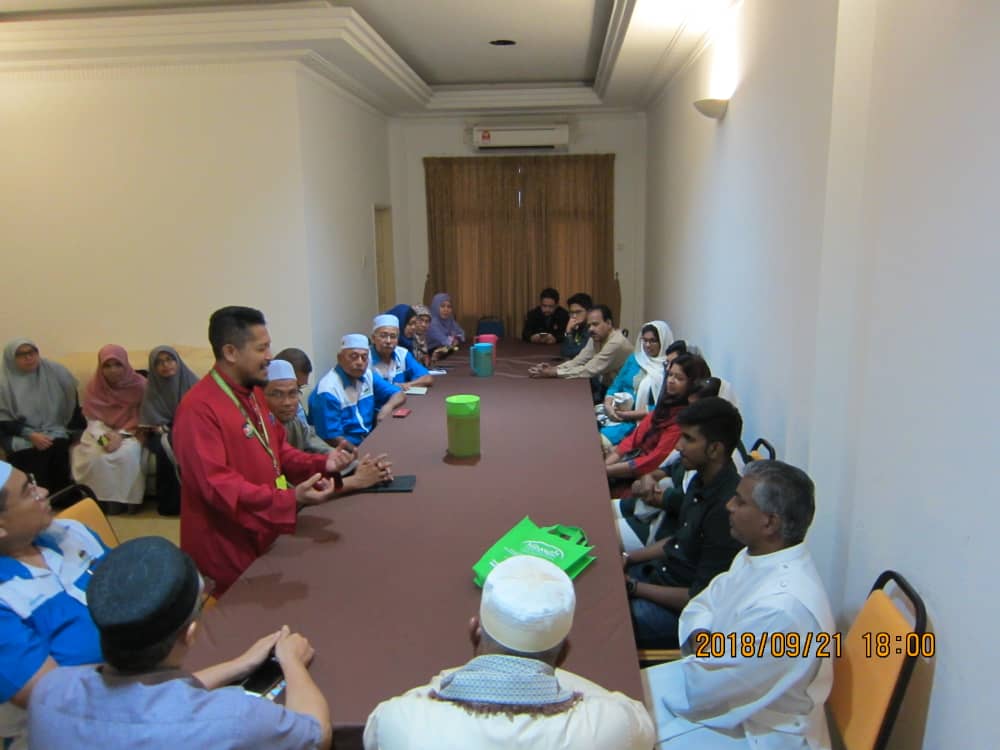
On Friday evening, 21 September 2018, the St. Joseph Parish Ministry of Ecumenical and Interreligious Affairs (PMEIA) made a courtesy visit to Saidina Hamzah Mosque in Kampung Batu Muda, Kuala Lumpur located 3kms away from Church of St. Joseph Church.

The mosque was built in 1993, on a one-hectare piece of land with the cost approximately RM7.6 million. It can accommodate approximately 2,500 people during prayers. However, there are about 20,000 Muslims living in the surrounding area. The mosque also conducts an Islamic Religious School for primary students.

Eight members of the PMEIA were welcomed by the Chairman, Haji Shaari Bin Mustafa, Director of Hidayah Center Foundation, En’ Abdul Ghaffar Mohammad Sharif, Ustaz, Imams and Board members, men and women of the Mosque. We expressed our heartfelt happiness and appreciation for the warm welcome accorded by them. After the speeches by the chairman and director of the mosque, followed by fellowship, we were invited to a tour around the compound. Surprisingly, they invited us to enter their worship house. It was my first time entering into a sacred sanctuary (Musalla - a place for Prayer). All this while I had an understanding that non-Muslims were prohibited (haram) to enter their sacred sanctuary. However, we were informed that non-Muslim were allowed in, but under certain circumstances.
 
Our PMEIA has commitment to work closely with members of the Saidina Hamzah Mosque. One of the projects planned is to have a blood donation campaign in their premise. We hope through this collaboration, we may be able to strengthen our social commitment and welfare service for our human family. In the near future, we may invite them to give us sessions on Islam in our parish, to learn more about each other’s faith and to improve our relations. In my opinion, our significant engagement brought together a fruitful dialogue session and sharing our spiritual insights. Thank you to the PMEIA for the effort made in meeting the board members of Saidina Hamzah Mosque.

As Catholics living in a Muslim majority country, it is good to have a better understanding of Islam as well as other faiths. Mixing and communicating with friends and family of other religions is common place in Malaysia, and it may not be a surprise to learn that your fellow friends may be interested to learn more about our Catholic faith, and vice versa. As we engage ourselves in faith discussions, we must be ready to learn from one another, without ignoring the beliefs of each tradition and the acknowledging the common ground that we share, as neighbours and as Malaysians.

The Church has always encouraged dialogues and learning with people of other faiths, and welcomed them into our midst. We must show respect and understanding, rather than alienate and ignore. Instead of defining ourselves with what separates us, let us instead embrace what unites us.

The Second Vatican Council stresses about respecting other faiths and acknowledging “what is true and holy in these religions” along with “fidelity to the mission of the Gospel,” (Declaration on the Relationship of the Church to Non-Christian Religions or Nostra Aetate #3).


We should love our neighbours (people of other religions) as ourselves and share the good news of Christ with them. As Catholics, we should understand that dialogue is a privileged way of “speaking the truth in love, we will grow to become in every respect…” (Ephesians 4:15) with Muslims as well as with people of other faiths.