Since my childhood I have heard a lot of stories about the great city of Varanasi especially from the Tamil movies. Varanasi is an ancient city in India, a centre of the Hindu world. Its history can be traced back 3,000 years. It is also known as Kashi and Banaras. The name Varanasi comes from the two rivers - Varana and Asi which meet at the River Ganges. Varanasi is situated on the banks of the River Ganges in the Indian state of Uttar Pradesh (North of India or below Nepal).
The beauty of the River Ganges
From 17th to 22rd October, my classmates and I were sent to this city for an exposure programme on Inter-religious Dialogue. It took us 36 hours to reach our destination (approximately 1681 kms) by train. We stayed at the Maitri Bahvan Institute, Bhelupur, Varanasi. It is an Inter-religious centre and institute for study of religious owned by the Diocese of Varanasi. Rev Fr Chandrakant is the director and person in-charge of the centre. During our one week programme, Fr Chandrakant was our official guide for the visits to the various religious institutions, temples and sight-seeing.
We visited some of the most famous Hindu shrines of the city – Kashi Vishwanath Mandir, Tulsi Manas Temple and Bharat Mata Temple. One early morning we had a meditation at the river bank of Ganges and we also had a sun rise experience. It was my second experience of seeing the sun rise after experiencing an earlier one on Mt Sinai, Egypt during my pilgrimage to the Holy Land. The sun rise was so beautiful and the rays made the water very colourful.
Then we had a boat ride and sailed on the River Ganges. In the early morning I noticed many Hindu priests, pilgrims and tourists taking a ritual bath, washing clothes and performing “puja” (worship) to the rising sun and to the Lord Shiva (see pic below).
A normal day at the river
Every evening an “arti” ceremony takes place at the river bank. I had the opportunity to observe this “arti” ceremony on my first evening there. It was interesting to observe this ceremony and see how they swung the “arti” with the rhythm. A lot of people joined the chanting of mantra, clapping and praising their Lord Shiva.
The 'Arti' ceremony
The Hindu people believe that one who dies in this city is sure to attain salvation and be free from the cycle of birth and rebirth. They also burn the dead bodies at the river banks and throw the ashes into the River Ganges. One of the shocking things that I witnessed during my stay at Varanasi was seeing at least 3 dead bodies a day carried to the river bank. The bodies are carried to the river bank for cremation and then the ashes are thrown into the river. That is why the Hindus believe that those who die and are cremated here get gateway to salvation at once from the cycle of births and rebirths. Since centuries the Hindus say it is a city of “Moksha” (liberation) for them. We had brief explanations about Hinduism by Prof. Dr D.N. Tiwari at the famous Banaras Hindu University.
Fr Chandrakant (left) and Dr Tawari
Varanasi is also a city where Buddhism was founded. Siddhartha Gautama Buddha gave his first sermon about the basic principles of Buddhism to his disciples. The place is called Sarnath which is about 15 kms from where we stayed.
The Buddhist Temple
With the Buddhist Monks
Besides the Buddhist temple we also visited Vajravidhya Institute. It is a seminary for the youngsters who intend to become monks. We had the opportunity to see closely the original “Dhammapada”, the collection of Buddha’s teaching and how they do the translation as well produce audio-visuals.
In the Library
Sermon of Buddha
Dhammapada
Reprinted Dhammapada
Actually, they are working hard to bring back Buddhism to India from Tibet. I realised the environment of Sarnath town is so much different compared to the other parts of the city of Varanasi. For me it was a haven of peace and tranquillity.
Besides Hindus and Buddhists, Varanasi is also a holy city for Jains. It is a birth place of Parshvanatha, the 23rd Tirthankar. Jain religion was born in the 9th century BCE. His birthplace is situated at Bhelupur, Varanasi (just behind where we were staying). We visited the International School for Jain Studies.
Jain Temple
Sikhism is also practised in Varanasi. Guru Nanak Dev at the age of 30 founded the Sikh religion. He visited Varanasi in the 16th century and he had an encounter there.
We also visited the Bahai centre. Ms Kaur and her mother welcomed us with prayers and songs and provided us with an Iranian lunch. The Bahai faith was founded in 1863 by Bahaullah; in Arabic it means “the Glory of God”.
Being entertained by the wonderful mother and daughter at the Bahai Centre
Islam and its culture have also had an influence on Varanasi. The Muslims have almost 384 mosques in the whole over city. We had a chance to have dialogues with the Ustazs and Principal of Jamaiah Salafiah (Madrasah).
Jamaiah
The Ustazs and Principal of the Jamaiah
This Jamaiah Salafiah has almost 800 students forming them to become “Imams”. When the “azan” (the call to prayer) started at 6 pm, they stopped the dialogues with us. They invited us to their mosque for prayer. We were fortunate enough to join them for prayer. We stood right behind them. We can see temples, mosques, churches in every corner of the city. Varanasi is rich with religious practitioners as well as local and foreign pilgrims who all live peacefully and in harmony.
Prayer time
Besides visiting religious centres, we did some sight-seeing, visited churches and the Pastoral Institute of Diocese of Varanasi. One evening we visited a Home for Blind Children home which is run by the Catholic Institution. The Home has 182 children. During our visit, the children sang a Hindi song entitled “Sathagam” (peace) for us. The first few lines of the lyrics captured my heart and it goes like this, “We are flower of this country (India), our message is a message of peace and we pray to God that peace be melted in our hearts.”
The blind children
One the first day, Fr Chandrakant explained about the function of Maitri Bahvan Centre, the city of Varanasi and River Ganges. I was fascinated when he elaborated the spiritual aspects of the River Ganges and the city of Varanasi. Varanasi and the River Ganges are symbols of the Kingdom of God where various peoples from different religions, cultures, castes and languages harmoniously gather together for prayers, study tours, etc.
Hindu Seminarians ... they start young
Normally, a river flows from north to south or from uphill to downhill. But the uniqueness of the River Ganges is that it flows from Mt Himalaya (North) to South and when the rivers comes to Varanasi it returns to North again. The Hindus believe that Mt. Himalaya is the head of Shiva and the River Ganges is the body of Shiva. The flow of the river from north to south and to north again symbolises the cycle of births and rebirths. The other thing we learned is that the King of Varanasi does not stay in the city of Varanasi. He believes that there should be only one king in one kingdom. For this reason the king resides at Kashi (outside of the city of Varanasi) because the King of Varanasi is the Lord Shiva who resides in the city as a head.
Life in the city of Varanasi begins at 3.30 am (Local time of India). People start to go the river for their ritual bath, washing cloths and performing “puja” to the rising sun and to the Lord Shiva. It symbolises like a baby once wakes up from his or her sleep will play on its mother’s laps. The River Ganges symbolises the laps of a mother and the sunrise’s rays which gracefully shine on the River Ganges symbolises the father. Therefore, we see throng of people come early in the morning at the River Ganges to enjoy playing on the laps’ of their divine mother and father. Even though the water does not look appealing and is filthy, the Hindus believe that this river has the power to wash away one’s sins.
A typical morning scene at the River Ganges
Scientifically, it is also proven that its water has a medicinal value.
When Fr Chandrakant spiritualised the city of Varanasi and River Ganges, it reminded me of the Dead Sea in Jerusalem. On the last day of our programmes during the evaluation I shared with him and my group about the Dead Sea and also the elements of truth in God’s creation. There are many streams flowing in the land of Palestine and finally they end at the Dead Sea. The many streams symbolise the various religions in the world are finding the one truth that is in one God. The mud and the Dead Sea water have medicinal value too. I also said that in the beginning no one knows about the spiritual aspects or elements of the River Ganges, Dead Sea and any of God’s creation. In the course of time and space the religious leaders and elite groups have spiritualised everything and discovered the mystery in everything that God created. Whenever we spiritualise anything from God’s creations it really surprises and amazes us. When we discover and rediscover from the creation of God then we can glorify and praise God for His mighty work.
The trip was really interesting. I have gained a lot of knowledge through this inter-religious exposure and study tour programme. I realised that there is a lot of religious freedom here and how the people are living harmoniously with each other in Varanasi. In Malaysia we have so many restrictions in order to profess, practise and propagate one’s religion in a community or individuals especially for us Christians. I think the civil authorities, individuals and groups have to respect the freedom of other faiths.
The journey to Varanasi and back was also interesting. It was my first experience travelling by train for such long hours. I had a panoramic view of the country side during the journey. It is sad to say that the city of Varanasi is very dusty and filthy. It is an unorganised city. I have never seen such poverty and an immense number of beggars. At the same time I asked my God why life is unfair. My only prayer is, “May the God of Justice feed the poor.” Overall, it was an enriching experience for me.
Born in Selangor, Malaysia, in 1963. I completed my priestly education at College General in Penang Seminary, where I studied Philosophy and Sacred Theology and obtained a baccalaureate. On 12 February 2003, I was ordained as a Catholic Priest. Since then, I have been serving as a Priest in the Kuala Lumpur Archdiocese. In 2010, I pursued further studies and obtained a Master’s degree in Systematic Theology at JDV in Pune, India. My priestly ordination motto is "TO LIVE A LIFE OF LOVE" (2 Jn 6).
Friday, 11 November 2011
Tuesday, 8 November 2011
I Am a Priest Today Because of Him
On Monday, 7th of November, I received numerous phone calls, text messages and emails from Malaysia to inform me about the demise of Rev Fr Leonard John, who was suffering from cancer.
I felt so sad after hearing the news of his passing. I recalled all the beautiful things that he had done in my life during his time as parish priest at the Church of Our Lady of Lourdes, Klang and as a formator in the seminary. He was the one who initiated my vocation to the priesthood.
In 1993, I shared with him my deep desire in wanting to become a priest. He was my parish priest, then. During my first meeting with him, he was straight to the point and told me this, “George, life outside is very much beautiful and you don’t waste your time to be a priest.” I left his office with heavy heart.
A few weeks later I met him again to express my irresistible feelings in wanting to become a priest. From the second meeting onwards he really motivated and encouraged me in many ways. I believe that his reason for being blunt with me during that first meeting was to test my sincerity.
However, for two years I was not accepted into the seminary due to my lack of proficiency in English and my lack of activity in Church at that time. After thinking carefully, I decided to resign from my job and to concentrate fully on improving my English. When Fr Leonard heard of my decision, he offered me a part time job at the parish office. He also advised me to take up English lessons in the morning and work in the parish office in the afternoons. For a year I was doing what he had instructed me and during this time he directed me in my search of the priestly vocation.
After two years of being rejected, I was finally accepted for admission into College General, Penang in 1995 to do my initiation year. However at that time I felt that I was still not ready and shared my apprehensions with Fr Leonard. With his spiritual direction and guidance I finally took up the challenge to join the seminary. Fr Leonard was my Spiritual Director before I joined the seminary and during my Theology years, he became by Dogma lecturer and formator. I continued to choose him as my Spiritual Director as I felt that he truly understood me.
If today I am a priest and have been one for the past 8 years, it is because of Fr Leonard’s initiation, motivation and his words of wisdom. One of Fr Leonard’s words of advice that remains with me until today is when he said, “You are not an intelligent man, but you have common sense and that will make you a good priest.” Fr Leonard was truly my mentor till the end.
At the same time, Fr Leonard had a great sense of humour. During our seminar days, we seminarians conducted a little survey on our priests who had a sense of humour and Fr Leonard topped the list. His jokes were original and spontaneous. A man of simple heart, he loved his parishioners immensely.
After hearing at the news of his death I decided to write this little note to express my gratitude to him and deep sorrow in his passing. Even though I am far away and unable to attend his funeral, my prayers are with him.
Friday, 14 October 2011
Celebrating as 'One Community'
We post-graduate students celebrated our community day on 8th and 9th October. The theme of our celebration was “… THEREFORE… We Commune.”
“Therefore” is a polyvalent which means it has many different meanings and functions. In the context of community “therefore” invites us to commune with all our differences, skills, talents, experiences, idioms, styles of writing and speaking etc. which can inspire a community to commune with Trinity God.
On the evening of both days, there were many indoor and outdoor games that were organised. Fr Francis, our Moderator of PG block, officiated the games and wished our community …”therefore” … to stay on always as one community. We had games such as table-tennis, basket-ball, cricket, tug of war, blowing a ping-pong ball, etc. We divided ourselves into 2 groups – Noel’s team and Tommy’s team. The overall champion was Noel’s team.
An intense game of table-tennis
The answer is 'blowing' in the wind
Our basketball heroes
Cricket Match
C'mon fellas ... Tarikkkkk!
On the morning of the 9th, we gathered as usual for Morning Mass at our Post-graduate block chapel. Fr Jose Thayil, SJ., the rector of Papal Seminary, celebrated the Mass. In his homily he highlighted about Karl Marx’s ideology of sharing and contributing whatever the community has with one another. He also mentioned that we as a community need to accept one another and to be united with the community God (the Trinity God).
In the evening we had a fellowship gathering at our dining hall. Fr Joseph Fernandez, organised a few talent-time games like Dumb Shrewd (it is a game when someone acts and the crowd needs to judge). Some of the students came forward to sing, play the guitar and the flute.
Our fun was truncated by the arrival of distinguished guests and lecturers of our college. Before we proceeded for dinner, Fr Job, the president of our college advised us to be cheerful in the community and to go beyond reaching out to others. He was very proud with our community for the increase in numbers since the establishment of JDV College 56 years ago. We ended with a sumptuous meal.
Makan Time
All in all, our Community Day celebration was a joyful one and enjoyable one. It certainly reminded me of my seminary days where we normally have “Agape Night” before we leave for our semester or year break. A life of community will stay alive if it increases its values in “3Gs – Grow… Glow… Go...” A community needs to grow in love. When it grows in love then it will glow in the spirit of the Lord and with that glowing spirit it can go in spreading the good news of our Saviour. Kudos!
Our 1st quarter semester breaks will commence from 15th to 30th October.
Most of the students will be returning home during this break. My classmates and I will be leaving by train for Varanasi (North-East of India) for an Inter-religious dialogue seminar which will be held from 17th to 23rd October – it is our class project.
Hopefully I will have some interesting stories to write on Varanasi when I return.
Wednesday, 12 October 2011
My Feathered Friends
One Sunday, I came back straight to my room after morning Mass without having my breakfast. Immediately, I started work on my assignment and a few minutes later I sensed some movement near my window and went closer to take a look. I noticed that two tiny baby birds had fallen on the platform of my window from its nest. One died and another one was struggling for life.
The dead baby bird
I really don’t know how to reach out and save this little one. (Our windows have sliding mosquito netting doors, grills and glass windows). First, I have to push the sliding mosquito net window and if I push it to one side, the nest would fall. Anyhow I took the risk. I pushed the sliding window a little and managed to reach the little one with a help of a stick. My next problem was how to send back this little one into its nest.
The baby bird that survived the fall
Actually, there were a few nests on the top of both sides of my window and they were a little high. I then decided to check on the internet how to save a baby bird. With few guidelines I manage to keep the bird in a safe condition till the evening. That evening I asked my neighbour, Fr Sadanad to help me to return the bird into the nest. He is quite a tall man. With his help, we managed to reach the nest and brought down it. We saw another two more tiny baby birds inside the nest. We placed it nicely into its nest together with the other two and put back the nest accordingly.
After putting the little baby bird back to its home I felt relieved. That evening the mother bird came and I guess it was not happy. It was moving around the nest and it didn’t settle inside its nest. For two days I was watching the mother bird. I was very sure it didn’t stay inside its nest. I guess something was not right. Probably it was because we had disturbed its home. On the third day, I decided to check the condition of the baby birds. I climbed and noticed that the one I saved on Sunday had died, whereas the other two babies were rescued by the mother bird. I was little upset and I realised it was my fault for disturbing their natural habitat.
I really don’t know what species of bird this is. I know the amount of time the birds spent collecting grass and other materials from far away to build the nest. It was really a tough job for them to shape it. I still remember sometime in the middle of July, these pair of birds met each other outside my window. From then on, they came regularly to find a place for settlement. Initially, they failed many times to set the foundation. I felt pity for them and I wished I could help them. Right from the beginning I observed them very closely with their movements. I used to snap photographs of their single action. I didn’t go closer to my window and I don’t close my curtains either because I was afraid I might disturb them.
The first pair of birds building their nest
After about a month, I realised that the birds had disappeared. I thought they had gone elsewhere to settle down. On 15th August (the feast of the Assumption of Our Lady), the birds returned and this time they were so serious in building up the nest. Within 2 weeks they had completed the nest.
The completed nest ... Home is where the heart is
On 19th September, when I came back from my class I heard baby birds chirping. I knew the eggs had hatched but I didn’t know how many there were all together. I was so happy to hear that. I quickly informed one of my good friends in Malaysia via email that baby birds were chirping.
Now, on the right and side of my window, there is another nest that is being built. The birds have come back and are slowly settling down after disappearing for past two weeks. Like a proud parent, I hope to ‘hear’ some good news soon.
'Couple' No 2 setting up home
These past 3 months I have been observing the movements of our feathered friends. One mama bird has completed the cycle of ‘giving birth’ and the next bird is in the process of laying eggs. At one time I felt sad because the 1st pair of parent birds had flown away with their 2 babies within 7 to 8 days before their maturity. The baby birds’ feathers were not fully formed but I am very sure they are in a protected home somewhere and hoping that they are still alive.
Whenever I look out of my window I wish I could be like St Francis of Assisi so that I could communicate with these birds to find out the conditions of the baby birds and be able to ‘speak’ with the rest of God’s creatures as well.
Many people say that animals and birds are much more intelligent than human beings. They are independent and free creatures. They can survive on their own without any human care and love. They know how to look after their own. We, human beings are so different. We need tender love and parental care. We can’t survive without our parents or one another’s care and love. Often, we worry about the habitat and the environment. Some of us are so caught up by this so much so that we spend more time and energy looking on this and fail to look after our own families or our own needs.
When I reflect on the care shown by the ‘Papa and Mama’ birds for their young, this verse from the Book of Exodus comes to mind, “… I carried you away on eagles’ wings and brought you to me…” (cf EX 19: 3- 4, DT 32: 11-12).
Other birds carry their young with talons but eagles are said to carry their young upon their wings so that when hunters attempt to shoot a flying eagle, the arrow or bullet would not hurt the young ones. Similarly, we too can see how God cares and protects His people just like the parent birds.
The dead baby bird
I really don’t know how to reach out and save this little one. (Our windows have sliding mosquito netting doors, grills and glass windows). First, I have to push the sliding mosquito net window and if I push it to one side, the nest would fall. Anyhow I took the risk. I pushed the sliding window a little and managed to reach the little one with a help of a stick. My next problem was how to send back this little one into its nest.
The baby bird that survived the fall
Actually, there were a few nests on the top of both sides of my window and they were a little high. I then decided to check on the internet how to save a baby bird. With few guidelines I manage to keep the bird in a safe condition till the evening. That evening I asked my neighbour, Fr Sadanad to help me to return the bird into the nest. He is quite a tall man. With his help, we managed to reach the nest and brought down it. We saw another two more tiny baby birds inside the nest. We placed it nicely into its nest together with the other two and put back the nest accordingly.
After putting the little baby bird back to its home I felt relieved. That evening the mother bird came and I guess it was not happy. It was moving around the nest and it didn’t settle inside its nest. For two days I was watching the mother bird. I was very sure it didn’t stay inside its nest. I guess something was not right. Probably it was because we had disturbed its home. On the third day, I decided to check the condition of the baby birds. I climbed and noticed that the one I saved on Sunday had died, whereas the other two babies were rescued by the mother bird. I was little upset and I realised it was my fault for disturbing their natural habitat.
I really don’t know what species of bird this is. I know the amount of time the birds spent collecting grass and other materials from far away to build the nest. It was really a tough job for them to shape it. I still remember sometime in the middle of July, these pair of birds met each other outside my window. From then on, they came regularly to find a place for settlement. Initially, they failed many times to set the foundation. I felt pity for them and I wished I could help them. Right from the beginning I observed them very closely with their movements. I used to snap photographs of their single action. I didn’t go closer to my window and I don’t close my curtains either because I was afraid I might disturb them.
The first pair of birds building their nest
After about a month, I realised that the birds had disappeared. I thought they had gone elsewhere to settle down. On 15th August (the feast of the Assumption of Our Lady), the birds returned and this time they were so serious in building up the nest. Within 2 weeks they had completed the nest.
The completed nest ... Home is where the heart is
On 19th September, when I came back from my class I heard baby birds chirping. I knew the eggs had hatched but I didn’t know how many there were all together. I was so happy to hear that. I quickly informed one of my good friends in Malaysia via email that baby birds were chirping.
Now, on the right and side of my window, there is another nest that is being built. The birds have come back and are slowly settling down after disappearing for past two weeks. Like a proud parent, I hope to ‘hear’ some good news soon.
'Couple' No 2 setting up home
These past 3 months I have been observing the movements of our feathered friends. One mama bird has completed the cycle of ‘giving birth’ and the next bird is in the process of laying eggs. At one time I felt sad because the 1st pair of parent birds had flown away with their 2 babies within 7 to 8 days before their maturity. The baby birds’ feathers were not fully formed but I am very sure they are in a protected home somewhere and hoping that they are still alive.
Whenever I look out of my window I wish I could be like St Francis of Assisi so that I could communicate with these birds to find out the conditions of the baby birds and be able to ‘speak’ with the rest of God’s creatures as well.
Many people say that animals and birds are much more intelligent than human beings. They are independent and free creatures. They can survive on their own without any human care and love. They know how to look after their own. We, human beings are so different. We need tender love and parental care. We can’t survive without our parents or one another’s care and love. Often, we worry about the habitat and the environment. Some of us are so caught up by this so much so that we spend more time and energy looking on this and fail to look after our own families or our own needs.
When I reflect on the care shown by the ‘Papa and Mama’ birds for their young, this verse from the Book of Exodus comes to mind, “… I carried you away on eagles’ wings and brought you to me…” (cf EX 19: 3- 4, DT 32: 11-12).
Other birds carry their young with talons but eagles are said to carry their young upon their wings so that when hunters attempt to shoot a flying eagle, the arrow or bullet would not hurt the young ones. Similarly, we too can see how God cares and protects His people just like the parent birds.
Tuesday, 27 September 2011
Celebrating our College Community Day
The history of Pontifical Athenaeum Jnana-Deepa Vidyapeeth (JDV) can be traced back to 1893 when Pope Leo XIII founded the Papal Seminary in Kandy, Sri Lanka and entrusted its direction and administration to the Society of Jesus.
In 1926, the Holy See elevated the seminary to the status of a Pontifical College with the rights and privilege of conferring the Baccalaureate, Licentiate, Master’s programme and Doctorate in Philosophy and Theology.
In 1955, the Papal Seminary was shifted from Sri Lanka to Pune, closer to De Nobili College, the Jesuit formation House which already existed in Ramwadi, Pune and the then Jesuit Superior supervised. Then it was not only open to the students of the Society of Jesus but to other Religious Congregations as well.
In 1975, the Pontifical Athenaeum adopted the Indian name of “Jnana-Deepa Vidyapeeth” – “By the kindled light of insight”. Now it is open to all students, race and culture and nationality. Both colleges, JDV and the Papal Seminary have developed a good relationship till now. JDV enjoys the character of a “University” whereas the Papal Seminary functions as a “Formation House” for the training of Diocesan priests.
JDV College
The compound is almost 100 acres surrounded with tress. It is really cooling and unpolluted environment. Whenever I am inside the compound I feel more relaxed and comfortable. Once I am out from this premise I can see the real India with poverty, congestion and pollutions.
The Library
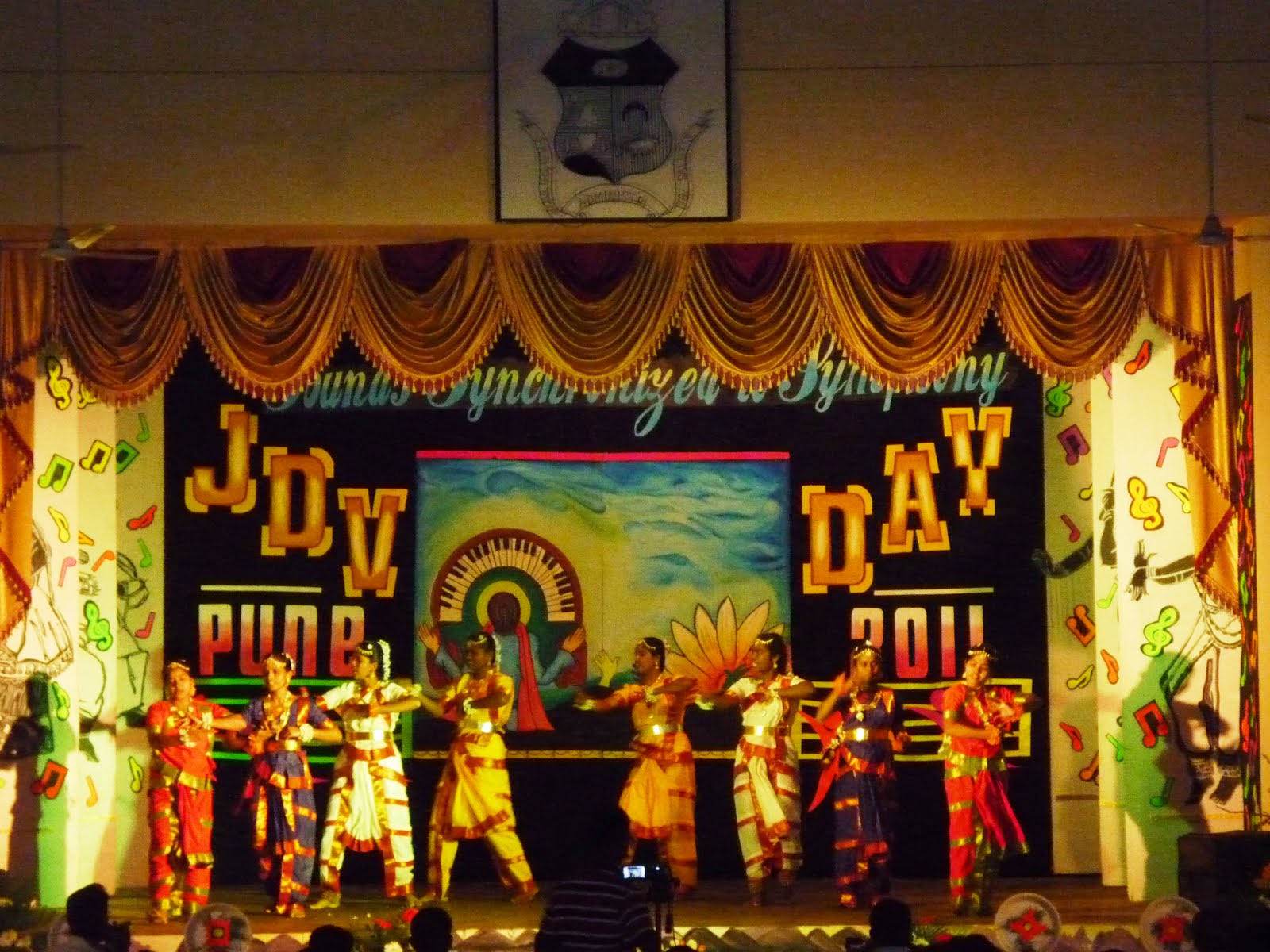
On Friday, 23 September, 2011, our college celebrated a day of community with the theme “Sounds Synchronised to Symphony”. We began our day with a Eucharistic celebration at the Papal Seminary Chapel at 8.30 am. The Mass was celebrated with the Syro-Malabar Rite. It is the Chaldean or Eastern-Syrian liturgy and it is one of the oldest Eucharistic Liturgies of the Church (A.D.200). It has 3 main parts in the liturgy: The entrance rite, the liturgy of the word and the liturgy of the faithful (presentations of the Gifts, Eucharistic prayer and the Holy Communion).
I was able to follow the Mass order this time because the whole Mass was celebrated in English and furthermore I had a Mass book where I could focus on each word and rituals used during the celebration. The last part of the celebration was when the celebrant bid a farewell to the Altar. The prayer goes like this: “I do not know whether I shall be coming back to offer the sacrifice upon YOU.”
For me it was a very touchy phrase and very meaningful as well. I told myself that whenever I leave the Altar after the Eucharistic celebration I will make it a point to say this pray and kiss the Altar. When I go up to the Altar again I shall thank the Lord for bringing up me to the Altar and make the celebration more meaningful for the people.
In the evening we all gathered at the hall for the cultural show which was started at 6pm and ended at 8.30pm. The president of the JDV College, Fr Job Kozhamthadam officiated the cultural show and in his opening speech said that with our various cultures in India we should synchronise them in our Christian spirituality as one symphony.
The seminarians, Sisters and Fathers performed various songs, dances, sketches and comedy. They were really wonderful.
The performance by the nuns ... yes these nuns can certainly dance!
One of the songs was a Malaysian song – “Rasa Sayang eh which was sung by the Post Graduate students.
The Rasa Sayang song being performed by the post graduate students ... I just gave them a basic coaching for the song and they did a good job!
There were both traditional and modern dances. The sketches basically brought the elements of education, moral and gospel values such as light and darkness, creation, ecology, evolution and life.
The lightings and sound systems brought more impact to the scenes. It was a fantastic show filled with creativity. It was a truly wonderful experience for me and I felt as if I was in an actual theatre watching a high-class performance.
Despite the heavy schedule of assignments and studies the students really spent time to practice and decorate the hall in order to celebrate and make the JDV community day a truly memorable occasion. The JDV anthem song was played at the closing ceremony.
In 1926, the Holy See elevated the seminary to the status of a Pontifical College with the rights and privilege of conferring the Baccalaureate, Licentiate, Master’s programme and Doctorate in Philosophy and Theology.
In 1955, the Papal Seminary was shifted from Sri Lanka to Pune, closer to De Nobili College, the Jesuit formation House which already existed in Ramwadi, Pune and the then Jesuit Superior supervised. Then it was not only open to the students of the Society of Jesus but to other Religious Congregations as well.
In 1975, the Pontifical Athenaeum adopted the Indian name of “Jnana-Deepa Vidyapeeth” – “By the kindled light of insight”. Now it is open to all students, race and culture and nationality. Both colleges, JDV and the Papal Seminary have developed a good relationship till now. JDV enjoys the character of a “University” whereas the Papal Seminary functions as a “Formation House” for the training of Diocesan priests.
JDV College
The compound is almost 100 acres surrounded with tress. It is really cooling and unpolluted environment. Whenever I am inside the compound I feel more relaxed and comfortable. Once I am out from this premise I can see the real India with poverty, congestion and pollutions.
The Library
On Friday, 23 September, 2011, our college celebrated a day of community with the theme “Sounds Synchronised to Symphony”. We began our day with a Eucharistic celebration at the Papal Seminary Chapel at 8.30 am. The Mass was celebrated with the Syro-Malabar Rite. It is the Chaldean or Eastern-Syrian liturgy and it is one of the oldest Eucharistic Liturgies of the Church (A.D.200). It has 3 main parts in the liturgy: The entrance rite, the liturgy of the word and the liturgy of the faithful (presentations of the Gifts, Eucharistic prayer and the Holy Communion).
I was able to follow the Mass order this time because the whole Mass was celebrated in English and furthermore I had a Mass book where I could focus on each word and rituals used during the celebration. The last part of the celebration was when the celebrant bid a farewell to the Altar. The prayer goes like this: “I do not know whether I shall be coming back to offer the sacrifice upon YOU.”
For me it was a very touchy phrase and very meaningful as well. I told myself that whenever I leave the Altar after the Eucharistic celebration I will make it a point to say this pray and kiss the Altar. When I go up to the Altar again I shall thank the Lord for bringing up me to the Altar and make the celebration more meaningful for the people.
In the evening we all gathered at the hall for the cultural show which was started at 6pm and ended at 8.30pm. The president of the JDV College, Fr Job Kozhamthadam officiated the cultural show and in his opening speech said that with our various cultures in India we should synchronise them in our Christian spirituality as one symphony.
The seminarians, Sisters and Fathers performed various songs, dances, sketches and comedy. They were really wonderful.
The performance by the nuns ... yes these nuns can certainly dance!
One of the songs was a Malaysian song – “Rasa Sayang eh which was sung by the Post Graduate students.
The Rasa Sayang song being performed by the post graduate students ... I just gave them a basic coaching for the song and they did a good job!
There were both traditional and modern dances. The sketches basically brought the elements of education, moral and gospel values such as light and darkness, creation, ecology, evolution and life.
The lightings and sound systems brought more impact to the scenes. It was a fantastic show filled with creativity. It was a truly wonderful experience for me and I felt as if I was in an actual theatre watching a high-class performance.
Despite the heavy schedule of assignments and studies the students really spent time to practice and decorate the hall in order to celebrate and make the JDV community day a truly memorable occasion. The JDV anthem song was played at the closing ceremony.
Subscribe to:
Comments (Atom)