Saturday, 23 February 2013

A Short Visits to Terengganu State

A Short Visits to Terengganu State
(21st - 22nd Feb)


I spent Thursday night in Kuala Terengganu. I was there to replace Fr Phillips Muthu for the weekend Masses in Kuala Terengganu and Dungun (Sunday is a working day for the state, so the Masses are usually held on Friday morning in Kuala Terengganu and in the evenings in Dungun and Kemaman).


On Thursday, I celebrated Mass and had the Rite of Enrollment for four candidates who are preparing for the Sacrament of Initiation this coming Easter Vigil. 


 On Friday, I celebrated Mass for the community in Kuala Terengganu and Dungun. I was surprised to see many students from South Sudan, Papua New Guinea and East Malaysia who have made up a large segment of the parish community there. It has truly become a multi-national community. 


Later as I was taking a drive, I had a panoramic view of the seaside, which I missed so much since I left the State of Terengganu a few years back.  I really admire Fr Phillips for the great work that he has done in this small yet flourishing community since he took over as parish priest. When I was assigned here I could not do much and I am glad that he has taken the initiative to turn this into an active and lively parish. I would also like to thank Fr Phillips for giving me the opportunity to come back here to celebrate Mass while he was away in Singapore for the Episcopal ordination. It was great to meet up with old friends and to make new ones and I truly enjoyed this trip to the East Coast – it was peaceful and relaxing.


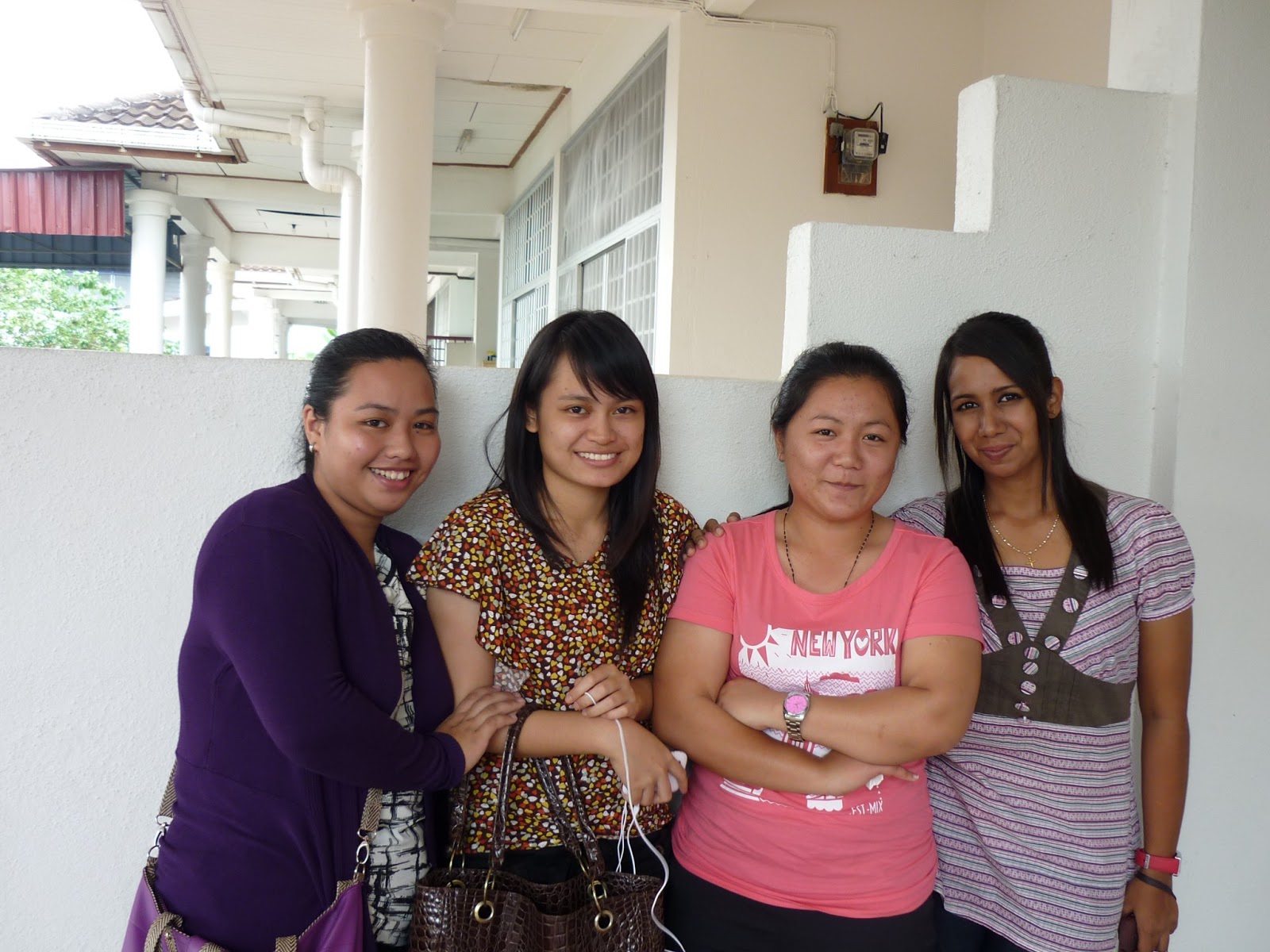
Aunty Josephine Gomez -  A Pioneer Parishioner of Dungun

Catechism Class at Dungun Community Centre

Wednesday, 23 January 2013

Break Into Car In Few Seconds


On the 22nd January, before coming for the CAPA (Clergy Archdiocesan Pastoral Assembly) Meeting, I stopped at the Archdiocesan Single Adults and Youth Office and Campus Ministry (ASAYO) in Bukit Nanas, Kuala Lumpur. I parked my car at the porch of my office as usual and went quickly to fax a document. Just within a few minutes someone broke into my car by smashing the window and stole my bag which I kept at the back seat of my car. I had a few clothes, books, my recent thesis, and medication in the bag.

When I parked my car that afternoon around 2.30, there were two drug addicts sitting under the porch. I guess they were the ones who had broken into my car. I was so upset when I saw my new car window broken. Pity!

Actually, I don’t blame them. It was my mistake. I was too careless. Leaving my belongings at the back seat of my car tempted them to break in. Even though there was a security guard around the compound, this still happened, what to do!

Bad things always happen within seconds and we start to blame ourselves and curse others. At times loss of personal belongings make us helpless and regretful. Breaking-in into houses, cars, other incidents are increasing everywhere. They happen to us even we are so alert. The thieves have set their minds in committing crime in order for them to survive. They don’t have mercy or compassion towards the victims. They always walk around thinking with their heads and NOT with their heart. We just have to be prepared to face these kinds of realities.

What is given is given and what is lost is lost. Everything happens for a reason.

BEC Gathering at Saujana Utama

On the 15th and 16th of January, I had the opportunity to visit two BECs (Basic Ecclesical Communities) in Saujana Utama, Sg Buloh in Kepong. The two BECs belong to the parish of Christ the Light, Kepong, under the administration of Fr Albet Arockiasamy.

The BEC gatherings were a part of the preparation for the coming feast of the parish. On the first day, we had a discussion based on the reading from 1 Corinthians 12: 12-30 and on the second day we summed up our discussion/sharing with the Eucharistic celebration at the "Balai Raya Saujana Utama". Almost 50 people attended the Mass.

I spoke about the description of the Church as explained by St Paul in his reading. St Paul uses the physical human body as a metaphor for the Church, the Body of Christ. We are many parts but we form one body heading in a common direction, especially in this Year of Faith. We are different from one another but we are unique, distinctive and irreplaceable. God design us to affirm, to encourage, to care, to serve and to build one another in His love. The Mass ended with a fellowship.


Friday, 7 December 2012

Mission Accomplished!


I have successfully completed my Master’s degree in Theology (MTh) at Jnana Deepa Vidyapeeth (JDV) and give thanks to God that I passed with a distinction.

My final thesis.
I started my course in June 2011 and ended in December 2012. My defence of my MTh dissertation was on Saturday, 1st December 2012. The title of my thesis was “Dialogue as Mission: A Christological Imperative for the Church in Malaysia.”
Nervously waiting outside the exam room.
My student life has come to an end. My sincere appreciation goes to my Guide, Rev Fr Mohan Doss, SVD and my two examiners, Rev Fr Thomas Kuriacose, SJ, and Rev Fr Prasad Langkapali, SJ.

With my guide Fr Mohan Doss, SVD (left) and my two examiners Jesuit Frs Thomas Kuriacose and Prasad Langkapali..
I would also like to express my gratitude to all my lecturers, college mates, former parishioners, friends and clergy for all your assistance in my further research, reflection, understanding and not forgetting your supports and prayers.

Being congratulated by my friends and classmates.
My friends at college.

With some of my classmates.

I shall be back in Malaysia on 8th December 2012. My last wish before leaving India was to visit Annai Vellangkanni Shrine in South of India, which I just did.  I enjoyed the serenity of the shrine and was fortunate to have been able to celebrate Mass there as well. I remembered all of you during the Mass and prayed for you and your families.

Sayanora to all my friends in India and looking forward to returning to Malaysia. 

Thursday, 18 October 2012

Visit to historical sites in Maharashtra

I had the opportunity to visit two historical cities, Aurangabad and Ellora, in the state of Maharashtra on a recent weekend trip with 14 of my fellow college mates. The journey by van took almost 7 hours from our campus in Pune.

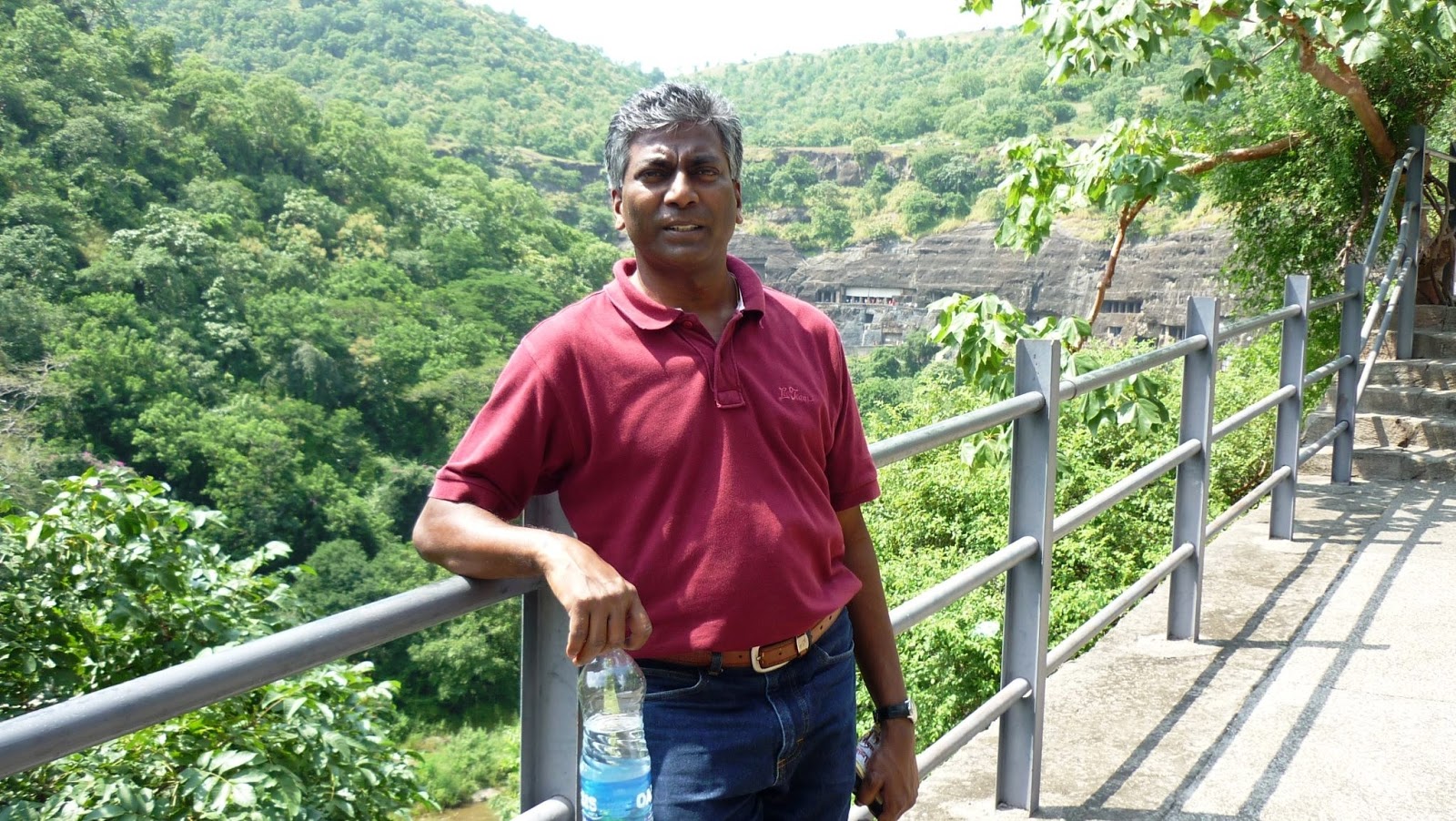
Our first stop was at the Ajanta Caves (9kms from Aurangabad city). We reached the site after a one and a half kilometre climb across the hillside. There are 30 rock-cut cave monuments which date between the 6th and 8th century B.C. include paintings and sculptures considered to be masterpieces of Buddhist religious art, with Buddha figures and depictions that have been carved using primitive tools such as hammers, pick-axe and chisels. The entire scenery was one of peace and serenity. The site is a protected monument under the Archaeological Survey of India and since 1983, the Ajanta Caves have been a UNESCO World Heritage Site.
On our way down from Ajanta Caves we stopped at the Bibi-Ka-Maqbara Mausoleum. The Bibi-Ka-Maqbara is a beautiful mausoleum of Rabia-ul-Daurani alias Dilras Banu Begum, the wife of the Mughal Emperor Aurangazeb (1658-1707 A.D.). This mausoleum is believed to be constructed by Prince Azam Shah in memory of his mother during 1651 to 1661 A.D. An inscription found on the main entrance door mentions that this mausoleum was designed and erected by Ata-ullah, an architect and Hanspat Rai, an engineer. The mausoleum draws its inspiration from the world famous Taj Mahal of Agra (constructed between 1631 and 1648 A.D.) and hence it is rightfully known as the "Taj of Deccan".
We stayed one night at St Francis de Sales Cathedral in Auragabad. In the morning we celebrated Mass and had breakfast with Rt Rev Bishop Edwin Coloco, Bishop of Aurangabad Diocese before leaving for the Cave Temples of Ellora (28 kms from Aurangabad city). These cave temples represent three religions – Buddhism, Hinduism and Jainism. The 34 cave temples were erected between 6th to 8th Century A.D and they portrayed with carving of gods and goddess. I was not fascinated with these caves compare to the Ajunta Caves. What most captured my sight was a panoramic view of natural waterfall which was situated next to these caves.
Our last spot was Daulatabad (fortress town). It was built on a mountain peak in the shape of a pyramid. It has a beautiful landscape. Cannons were mounted all over the fortress at strategic points. The Chand Minar (tower) located inside the Fort was built in 1435 AD. The height of this fortress is about 183 meters (600 feet). We all climbed to the mountain peak to have a panoramic view of the landscape and town. Only a few of us successfully climbed to the peak of the fortress.
The history of this fortress goes back to the 12th Century AD. The Sultan of Delhi, then, ordered the capital to be moved to the Southern city which had been renamed Daulatabad (Deogiri), the city of fortune. He wanted all his Delhi citizens, whether rich or poor, the sick and dying, to move out from Delhi to the new capital, Daulatabad. (Just imagine - The distance between Delhi and Daulatabad is approximately 1250 kms). In the cause of moving, thousands and thousands Delhi citizens died on the way. In the end, the sultan regretted his decision and ordered his people to move back to Delhi again.
One of my companions told me a story that at that time one cobbler was against the sultan’s order to migrate. The Sultan was so furious. He tied the cobbler and dragged him with a horse from Delhi to Dualatabad. By the time he reached this fortress town, only one of his legs remained. The rest of the body fell into pieces along the way. Then, I realised, that was the reason why they sell toy horses everywhere in this fortress city.
The trip was superb. We had a lot of fun. It was a good break from our studies. I had discovered another part of India – and this time, it was from the historical aspect.